

Are Healthcare, Politics And The High Cost Of Healthy Foods Related?
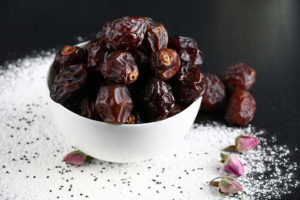
The World Health Organization answers part of this question in its healthy diet fact sheet. It names food prices among the things that shape what people eat, and its list of government actions puts tax and subsidy next to nutrition counselling in primary health-care facilities. An earlier post on this site with the same title compared the cost of whole diets and the price per kilo of dates. This one asks two narrower things: does a change in price change what people buy, and what does one portion of dates cost?
Health care and food policy on one list
WHO says governments “have a central role in creating a healthy food environment”. It wants national policies to line up across “health, food and agricultural, education, fiscal and trade policies”.
Its list of actions then runs from the tax office to the clinic. It includes subsidies for producers and retailers “to grow, use and sell fresh fruit and vegetables”, and taxes to cut production of processed foods high in saturated fat, trans fat, free sugars and salt. It also covers nutrition labelling, and “providing nutrition and dietary counselling at primary health-care facilities”.
So in WHO’s framing, the health system and the tax system are two levers on the same problem. How hard a government pulls either one is a political choice, and this post does not argue for one side.
Do price changes move what people eat?
A 2017 systematic review and meta-analysis in PLOS ONE, led by Afshin with co-authors in the United States and the United Kingdom, gathered 23 interventional studies and 7 prospective cohorts. Studies with price data from before 1990 were left out. The review treated price cuts as subsidies and price rises as taxes.
In the pooled results, a 10% drop in price raised consumption of healthful foods by 12%. For fruit and vegetables alone the rise was 14%. Going the other way, a 10% price rise cut consumption of unhealthful foods by 6%, and cut sugar-sweetened drinks by 7%.
The review also looked at body weight. Fruit and vegetable price cuts lowered BMI by 0.04 kg/m² per 10% drop, based on 4 studies, a small effect whose 95% confidence interval reached zero. Price changes for sugary drinks or fast food did not significantly change BMI, also based on 4 studies. The authors concluded that subsidies, and interventions with several parts combined, “appear most effective”.
What one portion of dates costs
The NHS counts a 30g portion of dried fruit, “such as currants, dates, sultanas and figs”, as one of your 5 A Day. It adds that dried fruit should be eaten at mealtimes, not as a between-meal snack, to reduce the risk of tooth decay.
Prices below come from one Malaysian date wholesaler’s list, checked in November 2026. The per-portion column is not on the list: it is the price per kilo multiplied by 0.03, worked out here. The first table covers every in-stock date listing of 1kg or less.
| Variety | Listing | Pack | Price (RM) | RM per kg | RM per 30g portion |
|---|---|---|---|---|---|
| Ajwa | A | 1kg | 31 | 31.00 | 0.93 |
| Ajwa | AA | 1kg | 36 | 36.00 | 1.08 |
| Ajwa | AAA VIP (Large) | 1kg | 44 | 44.00 | 1.32 |
| Safawi | A | 1kg | 35 | 35.00 | 1.05 |
| Safawi | AAA Jumbo | 1kg | 45 | 45.00 | 1.35 |
| Mariami | AAA | 1kg | 40 | 40.00 | 1.20 |
| Medjool | Jumbo, one box | 900g | 70 | 77.78 | 2.33 |
Two other 1kg listings, Safawi AA at RM40 and Ajwa VVIP Jumbo at RM55, were out of stock on the day.
A bigger outlay buys a cheaper portion
The same list has larger packs that cost less per portion, but each one asks for more money at once.
| Variety | Listing | Pack | Price (RM) | RM per kg | RM per 30g portion |
|---|---|---|---|---|---|
| Mariami | A Normal | 5kg | 75 | 15.00 | 0.45 |
| Safawi | A No.2 (Mini) | 5kg | 80 | 16.00 | 0.48 |
| Ajwa | A No.1 (Small) | 5kg | 115 | 23.00 | 0.69 |
The RM75 Mariami 5kg pack gave the lowest price per kilo of any in-stock date listing, about 45 sen a portion. The cheapest in-stock date pack to buy at all was the RM31 Ajwa A 1kg, at about 93 sen a portion. Within Ajwa alone, the A No.1 5kg pack brought the portion down to about 69 sen, for RM115 up front. At the top of the in-stock range sat the 900g Medjool box at about RM2.33 a portion.
Every price here was the list’s current price, which sat below its regular price. The Mariami A Normal 5kg pack, for example, had a regular price of RM120. A shop discount is not the same thing as the subsidies and taxes in the Afshin review, so those percentages should not be read across.
So are they related?
On WHO’s account, yes: food prices shape diets, and health care, tax and trade policy all sit on the same list of fixes. The Afshin review puts numbers on the price half. On one Malaysian date list, a single portion ran from about 45 sen to RM2.33, and the lowest figure needed an RM75 outlay.
More about this site is on the About Us page and the contact page.