

Dates and Cancer Claims: Dates Supplier Malaysia Insights
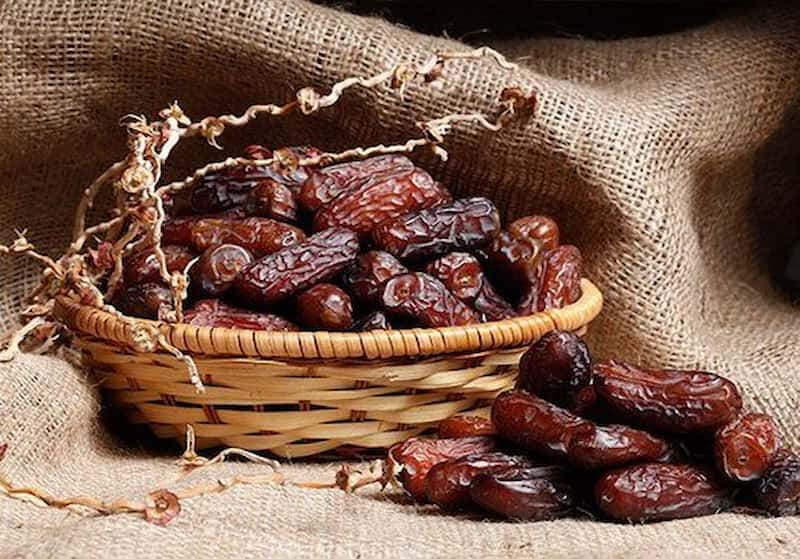
Dates Suppliers in Malaysia
Dates Supplier Malaysia sources dates from growers across Iran, the Gulf and North Africa and moves them through to retailers, cafes and hampers resellers around the country. Stock spans several named varieties — Medjool, Mazafati, Piarom, Ajwa among them — each with its own texture, sweetness and price point, and buyers choose based on what a batch will actually be used for: a table gift box, a bakery ingredient, or everyday snacking.
What is actually in a date
1. Fibre and macronutrients
A typical date is mostly natural sugar and carbohydrate, with a meaningful amount of dietary fibre alongside it — around 6-8g fibre per 100g depending on variety. USDA lists 6.7 g for Medjool and 8.0 g for Deglet Noor (USDA Medjool, USDA Deglet Noor). In blood sugar tests, dates raised blood glucose less than the same amount of carbohydrate taken as pure glucose (Alkaabi et al., 2011).
2. Vitamins and minerals
Dates carry vitamin B6, small amounts of vitamin A, and minerals including potassium, magnesium and copper. Per 100 g of Medjool, USDA lists 696 mg potassium, 54 mg magnesium, 0.36 mg copper, 0.25 mg vitamin B6 and 7 µg vitamin A (USDA). None of these are unique to dates, but the combination in a compact, shelf-stable fruit is part of why they’re a common snack across the Middle East and South Asia.
3. Antioxidant compounds
Dates contain plant compounds — flavonoids, carotenoids, phenolic compounds — that are also found in many other fruits, vegetables, teas and spices. These compounds are part of normal plant chemistry, not something exclusive to dates, and their presence in a food is a composition fact rather than a health claim on its own. Reviews of date chemistry list phenolic acids and carotenoids among the fruit’s components, and the amounts vary with cultivar, ripening stage and growing conditions (Tang et al., 2013).
What cancer research on dates has shown
This section is general information, not medical advice. Anyone being treated for cancer should follow their own doctor and oncology team.
Most of the research behind “dates fight cancer” headlines was done on cells in a dish or on animals. A 2012 review describes the recent work on dates as many in vitro and animal studies, and says studies of their health benefits are still inadequate (Vayalil, 2012). A 2015 review asked whether date polyphenols could reduce the organ damage caused by chemotherapy, and its authors note that this had only been studied in small animals (Yasin et al., 2015).
We found one study in people. At a university hospital in Jeddah, 56 children with cancer were followed: 26 took Ajwa dates alongside their standard treatment and 30 did not. The Ajwa group had fewer infections, fewer hospital admissions for fever with neutropenia, and better survival (Al Jaouni et al., 2019). The study was not randomised. Patients chose whether to take the dates, so the two groups may have differed in other ways, and the dates were added to chemotherapy, not used in place of it. We found no randomised trial that has repeated the result.
The NHS makes one general link. Eating plenty of fibre is associated with a lower risk of heart disease, stroke, type 2 diabetes and bowel cancer, and adults are advised to reach 30 g of fibre a day (NHS). That is fibre from all foods. Dates count towards it, but we found no study showing that eating dates prevents or treats cancer.
What a Malaysian supplier can honestly tell customers
A reputable supplier sticks to what’s on the label and in the composition data: named variety, sugar and fibre content, storage life, and where the batch was sourced. Claims about disease prevention or treatment belong to a doctor or dietitian, not a date seller — and a supplier that overstates what a fruit can do for a customer’s health is trading trust for a sale that won’t repeat. Dates are a food, best judged on taste, freshness and price, and eaten as part of whatever diet a customer’s own healthcare provider has actually recommended.
Sourcing and buying
For a business buying at volume, the practical questions are the ones that affect the shipment: harvest season, moisture content for storage life, packaging that protects against pests and humidity in transit, and a supplier who can produce sourcing documentation on request. Those are the details that determine whether a batch arrives sellable, not any claim printed on a blog post. Our comparison of Mazafati, Medjool and Deglet Noor covers how the main varieties differ, and our note on traceability and origin covers how to check where a batch came from.
References
- Vayalil PK. Date fruits (Phoenix dactylifera Linn): an emerging medicinal food. Crit Rev Food Sci Nutr. 2012;52(3):249-71. PubMed 22214443
- Tang ZX, Shi LE, Aleid SM. Date fruit: chemical composition, nutritional and medicinal values, products. J Sci Food Agric. 2013;93(10):2351-61. PubMed 23553505
- Yasin BR, El-Fawal HA, Mousa SA. Date (Phoenix dactylifera) polyphenolics and other bioactive compounds. Int J Mol Sci. 2015;16(12):30075-90. PubMed 26694370
- Al Jaouni SK et al. Effects of Phoenix dactylifera Ajwa on infection, hospitalization, and survival among pediatric cancer patients: a nonrandomized controlled trial. Integr Cancer Ther. 2019;18:1534735419828834. PubMed 30791734
- Alkaabi JM et al. Glycemic indices of five varieties of dates in healthy and diabetic subjects. Nutr J. 2011;10:59. PubMed 21619670
- USDA FoodData Central. Dates, medjool (FDC 168191); Dates, deglet noor (FDC 171726). fdc.nal.usda.gov, fdc.nal.usda.gov
- NHS. How to get more fibre into your diet. nhs.uk